
A historic bathhouse and five sake breweries, two hours from Shinjuku. The trick is the order.
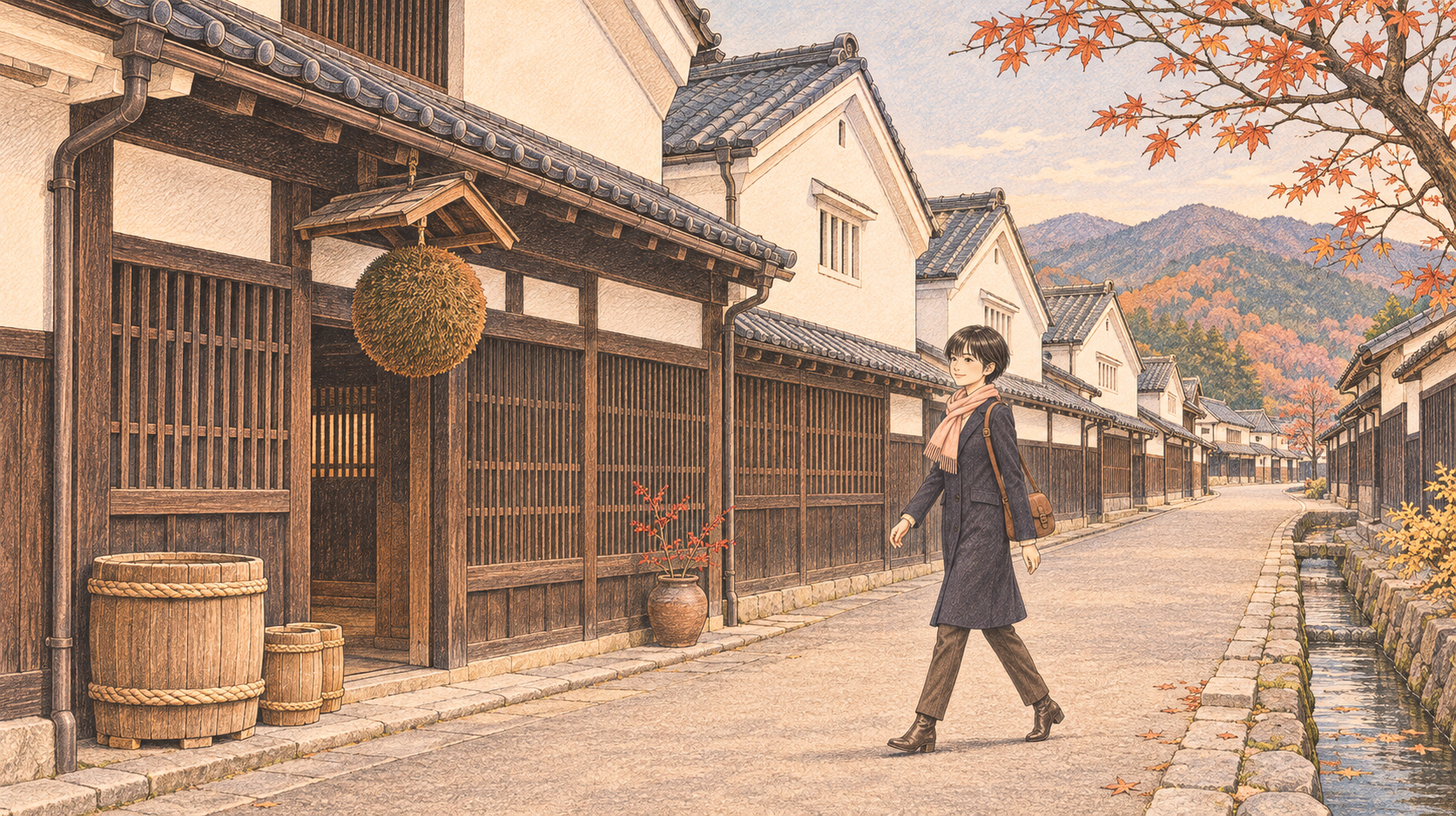
Kami-Suwa sits on the shore of Lake Suwa in Nagano. Five sake breweries, the Suwa Gokura, stand along a stretch of the old Koshu Kaido road of barely 500 meters. A few minutes away, a historic bathhouse keeps a stone bath deep enough to stand in. You can do both in a day. I think they are better spread over two.
At a glance
- Order: bath first, sake second
- Avoid: Wednesdays (Masumi closed), Sundays (Honkin closed), and the 2nd and 4th Tuesdays (the bathhouse closed)
- Budget: about ¥850 for the bath and ¥4,000 for the sake tasting set
- From Tokyo: a little over two hours by train from Shinjuku
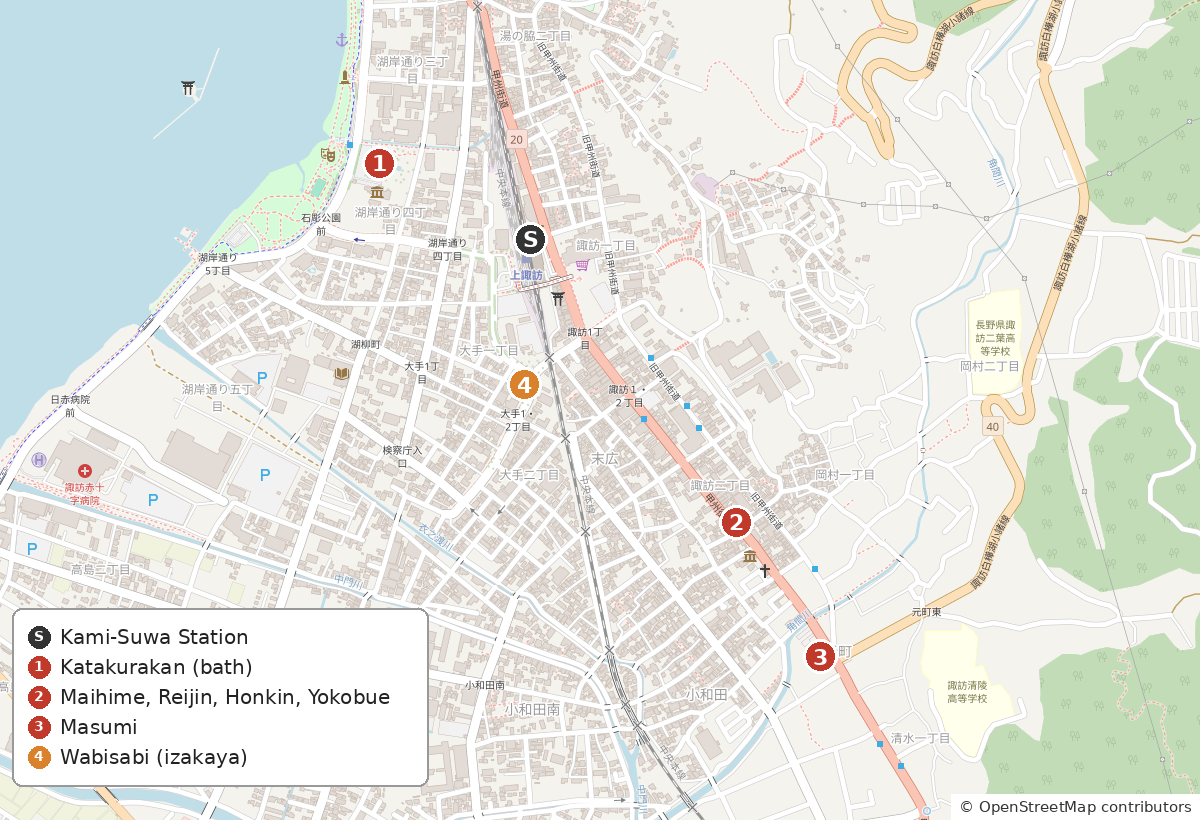
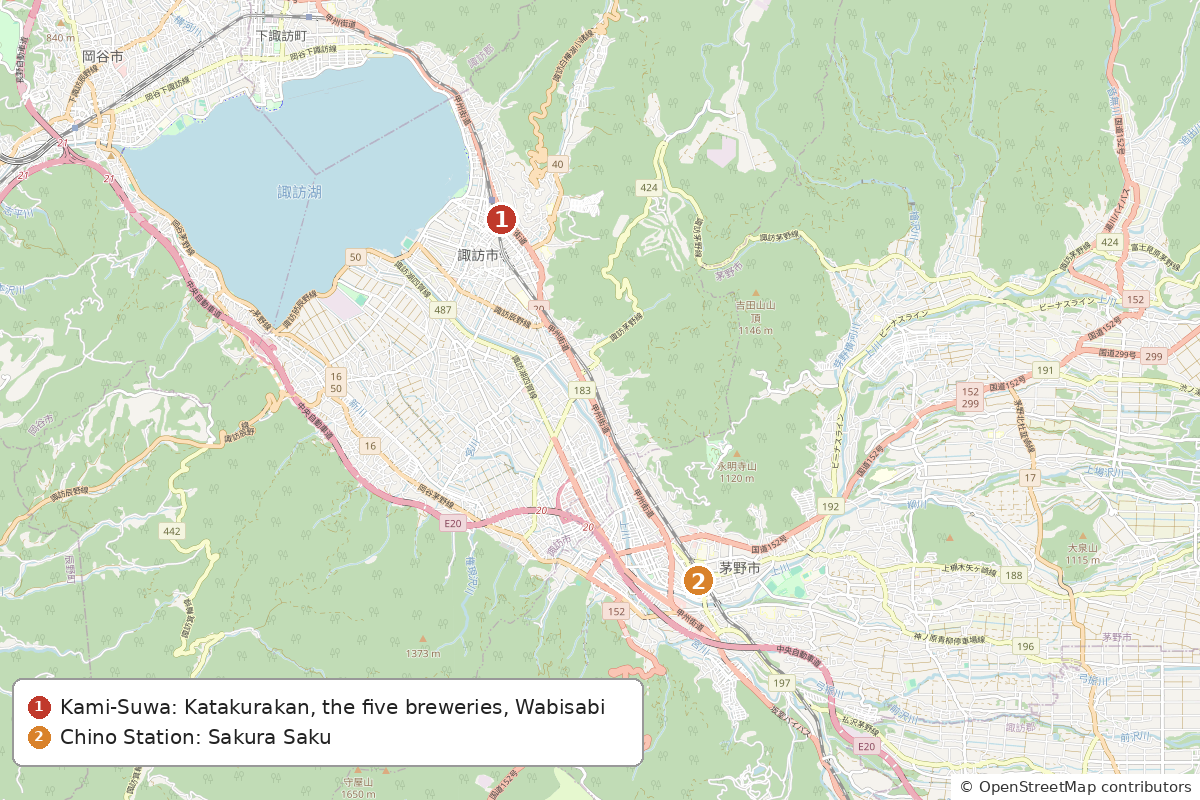
Everything is within walking distance of Kami-Suwa Station. Map data © OpenStreetMap contributors.
Bath first, sake second
Drinking before a hot bath is a bad idea. Alcohol and hot water together can make you dizzy or worse. So bathe first, then walk the breweries. If you stay the night, save the next bath for the following morning.
Katakurakan
Katakurakan is about 8 minutes on foot from Kami-Suwa Station. The Katakura silk family built it as a bathhouse for the people of the town, and its buildings are now an Important Cultural Property of Japan. The Sennin-buro ("bath for a thousand people") is a stone bath for up to a hundred bathers at once. It is 1.1 meters deep, with fine gravel on the bottom, so most people stand. Look up while you soak. The hall has stained glass and carved decoration.
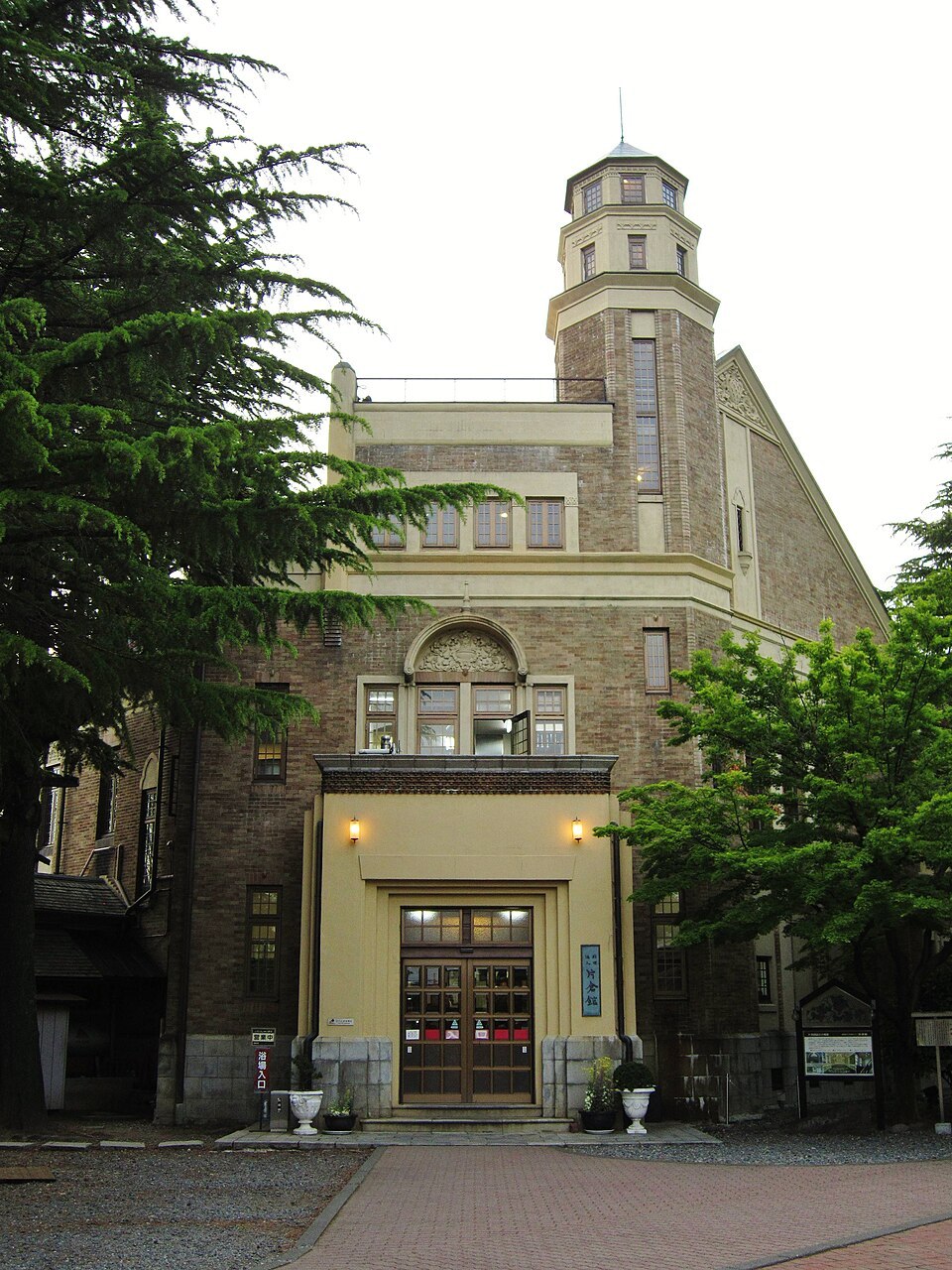
Katakurakan bathhouse. Photo: Qurren, CC BY-SA 3.0, via Wikimedia Commons

- Hours: 10:00 to 20:00 (from 9:30 on weekends and holidays). Last entry is 19:30.
- Closed: the 2nd and 4th Tuesday of each month
- Adult entry: ¥850. Shampoo and soap are provided. A towel is ¥200, and a bath towel rents for ¥300.
- As in any Japanese bath: wash at the taps before you get in, no swimsuits, and keep your towel out of the water.
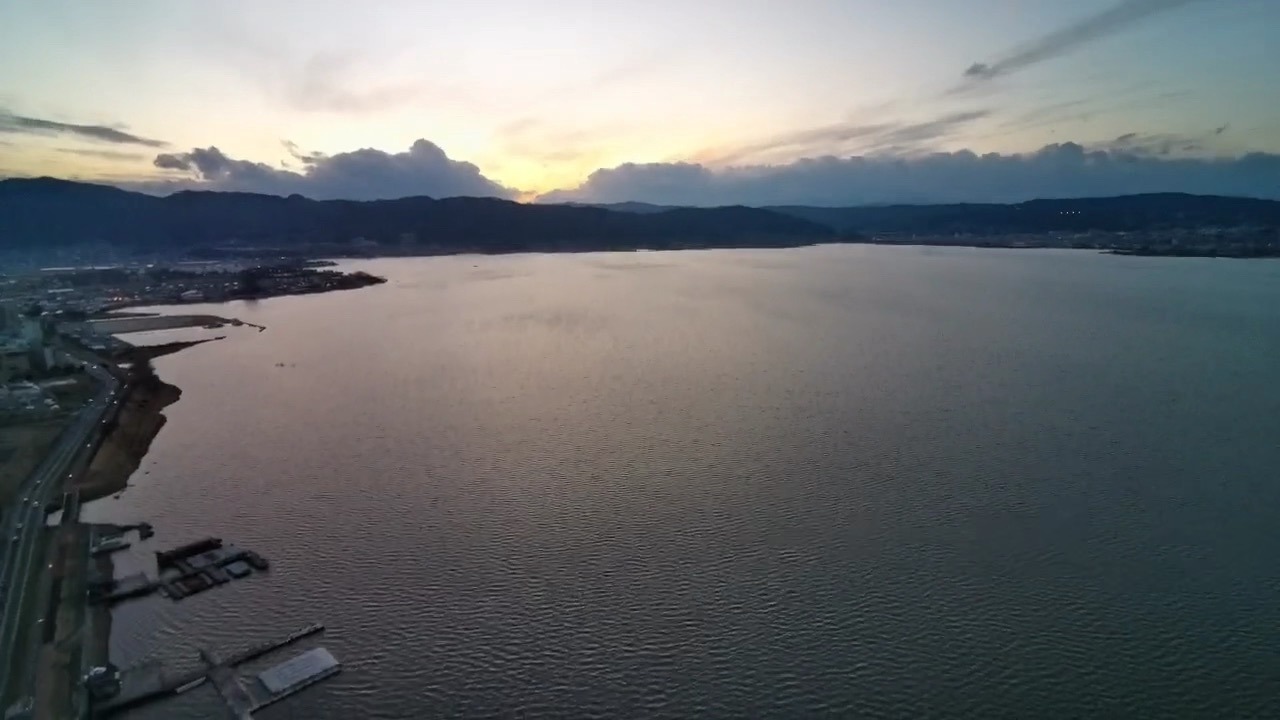
The lake is right beside the bathhouse, so a slow walk along the shore is the natural next step.
The Suwa Gokura breweries
The five breweries are Maihime, Reijin, Honkin, Yokobue and Masumi. Masumi is where Sake Yeast No. 7 was found in 1946. It is still one of the most widely used sake yeasts in Japan, so a little of this town is in sake brewed far away.
The easiest way to taste is the Gokuraku Set, ¥4,000. It includes:
- a tasting at each of the five breweries, four or five sakes at 20 ml each
- an original glass and a drawstring bag to keep
- stickers of each brewery's label and a mat to collect them on
- a digital map
The glass is yours to keep. It is a small, pretty thing!
A few things worth knowing:
- Buy the set online, or at the Suwa City Tourist Information Center inside Kami-Suwa Station. The counter sells sets until 15:00.
- Each brewery stops pouring 30 minutes before it closes. Most close at 17:00.
- If a brewery is closed that day, you can collect its cup sake at one of the others instead.
- The set stays valid until the plan ends, so you can split the five breweries over two days.
- Please do not bring snacks into the breweries. Staff use a translation tool with visitors from abroad.
To compare as you go, try a brewery's junmai next to its ginjo. The junmai is usually fuller and rounder. The ginjo is usually lighter and more fragrant.
Map: Masumi and the brewery street
Which day to go
| Place | Closed |
|---|---|
| Honkin | Sundays |
| Masumi | Wednesdays (and January 1) |
| Katakurakan | 2nd and 4th Tuesdays |
| Maihime, Yokobue, tourist center | Year-end and New Year holidays |
| Reijin | Irregular |
A Monday, Thursday, Friday or Saturday works best. A closed brewery is not the end of the plan, since you get its cup sake elsewhere. A closed bathhouse is harder to replace, so plan around Katakurakan first. On weekends and holidays, Honkin and Yokobue open at 10:00 instead of earlier, so a morning bath followed by the breweries fits well.
Where to eat
Wabisabi, near Kami-Suwa Station. This is a small izakaya (a Japanese pub that serves food). Reviews single out the braised Shinshu pork belly (kakuni). The local sake comes in several grades of the same label, which makes it a good place to compare what you tasted in the afternoon. Reviewers also mention that the woman at the counter speaks very good English and has a gentle, courteous manner, so you can ask about the sake or the food.
Map data © OpenStreetMap contributors.
Sakura Saku, near Chino Station. Chino is the next stop after Kami-Suwa on the way back to Tokyo, 6 to 7 minutes by local train, and many Azusa trains stop there too. Sakura Saku specializes in horse meat (sakura-niku), a long tradition in this part of Nagano. You can have it raw as basashi, or cooked as a cutlet or in a sukiyaki-style hot pot. Reviewers praise the basashi. One meal can also cover Shinshu soba and a local sake flight, and the prices are modest for the quality. It is a calm room without many tour groups. The staff do not speak much English but help with gestures. Lunch starts at about ¥2,000 and dinner at about ¥5,500. It is usually closed on Mondays and Tuesdays, and the restaurant's website posts each month's days. It takes reservations.
A simple plan
- Arrive in Kami-Suwa and walk to Katakurakan for a bath.
- Rest by the lake, then have lunch near the station.
- Pick up the Gokuraku Set before 15:00 and walk the breweries.
- Have dinner at Wabisabi, or at Sakura Saku in Chino on your way back.
- Or stay the night at one of the Kami-Suwa onsen inns, and finish the breweries the next day.
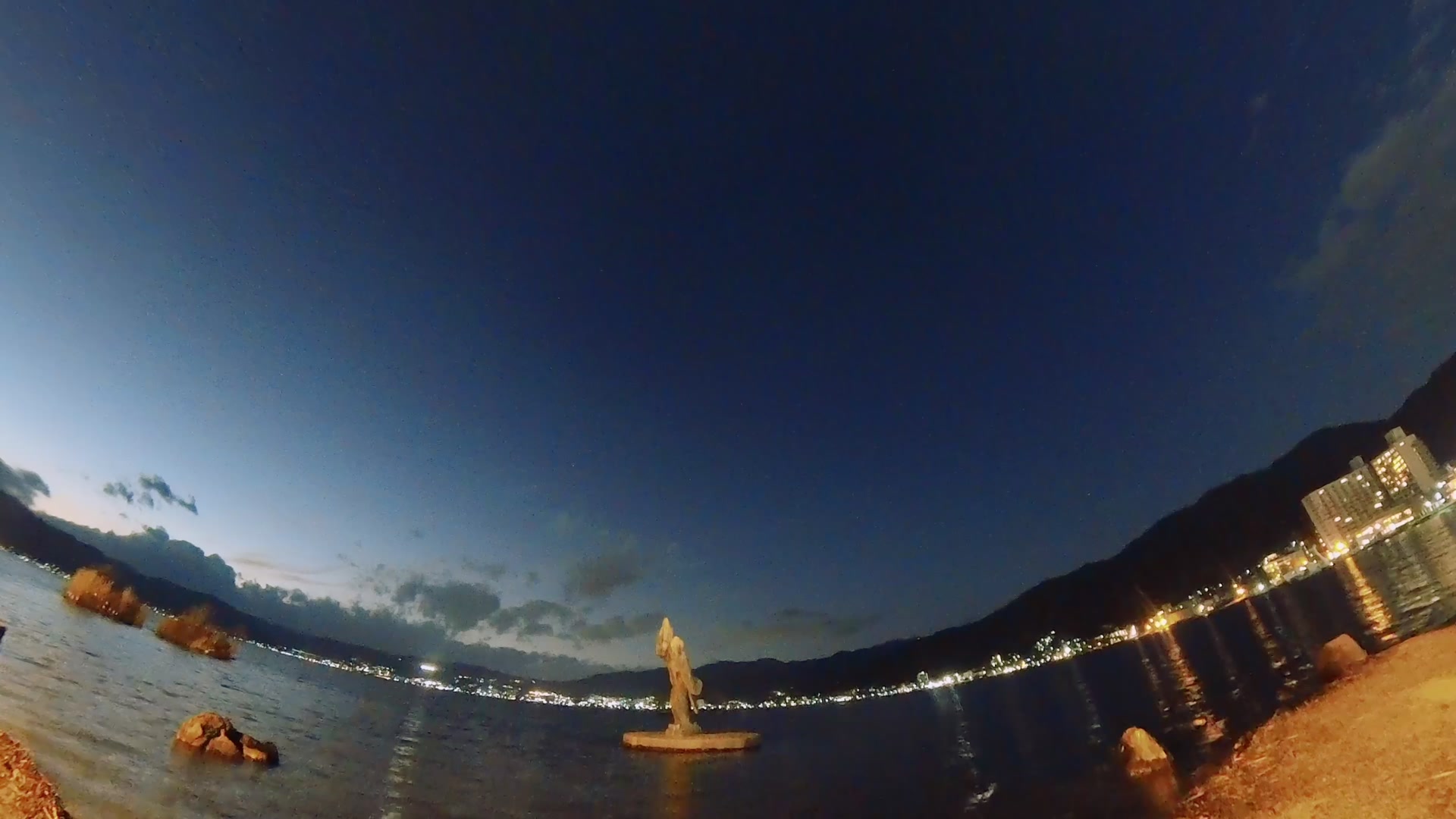
If you stay, walk down to the lake after dark. The lights of the onsen town curve around the water.
Getting there from Tokyo
By train. The Limited Express Azusa runs from Shinjuku in a little over two hours. Check that your train stops at Kami-Suwa, because not every Azusa does. All seats are reserved, tickets go on sale one month ahead, and the Azusa can be used with the JR Pass.
By highway bus. Buses from Busta Shinjuku to Kami-Suwa Station take 3 hours 10 to 45 minutes. They are the cheaper option, at ¥3,500 online or ¥3,800 at the counter on Alpico's fare table.
Book it on Keio Dentetsu Bus's free app, or on Keio's English site, highway-buses.jp.


Avoid the bus during Japanese holidays. Around Golden Week (the first week of May), Obon (mid-August), the New Year, and the autumn long weekends, the expressways out of Tokyo jam badly, and buses can run hours late. Take the train on those dates, and book your Azusa seats as early as you can. They sell out fast.
Sources and useful links (as of November 2026)
- Suwa City Tourism Association, Suwa 5 Sake Breweries: brewery hours and closing days
- Suwa Gokura Tour (Gokuraku Set): price, contents, where to buy, tasting rules
- Katakurakan: hot spring and access: hours, fees, the bath
- Sakura Saku and Chino tourism guide: menu, closing days, language
- Ekitan, Limited Express Azusa: ticketing and stops
- Alpico, Highway bus Chino, Suwa, Okaya to Shinjuku (Japanese): bus time and fares
App Store is a service mark of Apple Inc. Google Play and the Google Play logo are trademarks of Google LLC.
No comments:
Post a Comment